Wednesday, June 3, 2015

Son Cubano Daiquiri and "Chan Chan"

Casa De Amore
When you're in love with someone, all you want is for them to love you back. We do outlandish, foolish things when in love. And it hurts when the other person simply doesn't feel the same way as you. We start to question ourselves. What did I do wrong? Why doesn't this person like me the way I like them? It can become extremely vexing, driving us to the point of losing sleep. But maybe, just maybe, love picks us. Love decides who winds up together. Love decides who we marry & have children with. Who we build a house with. Who we play in the sand with. Love can be wrong. But what if it's right?

Havana Skyline
Photograph by Kahlilah Nelson
You finish the lovely meal of fresh sea bass you caught that day, some greens from your tiny backyard garden and a lovely bottle of Cuban Tempranillo. You clear away the dishes and as you're standing at the kitchen sink, the misty sea breeze drifts through the open window to remind you that you're home. You've earned this moment. You both work hard to make this place your home. Your shoulders are sunburned from fishing, her knees are sore from gardening. But now you can relax. You turn around only to find... she's gone. She's headed to the beach. You know this because her favorite thing to do after dinner is to watch the stars fall out of the Caribbean sky. So you decide to join her. But first, cocktails. Normally, you just whip up a cold pitcher of Kalimotxo, but tonight is special. What is something delicious I can bring down to the beach? You open the creaky cabinet above the fridge. (You've had to WD-40 the cabinet hinges once a month because of the humidity) In it, you find a dusty bottle of Bacardi Gran Reserva Maestro de Ron...


Son Cubano Daiquiri
To conduct the mass amounts of sound, rhythms and tone in life, or in a symphony, one must be a master, a maestro. To bring about such beautiful refrain with just a flick of a baton, or to create a delicate and refined spirit to be sipped by everyone from the common consumer to those with the most refined of palates, requires a long scrupulous process of tweaking, dissecting and reflecting. It takes years of practice to achieve mastery, ten thousand hours to be a bit more precise. To pay homage to the rich history of Cuba, it's eclectic cultural mix of music, people and spirit, we thought it necessary to use a product that pays tribute to the Master Blenders of rum making in the Caribbean and fuse it with liquors and aperitifs from around the world. Just as the culture today in Cuba has been influenced by travelers from far and wide, this cocktail, the Son Cubano Daiquiri, (which is a style of music that originated in Cuba) epitomizes the monumental changes and arduous evolution in this small yet resilient Caribbean island. 


Ingredients:
1 1/2 oz Bacardi Gran Reserva Maestro de Ron
1/2 oz Vya sweet vermouth
1/2 oz Alvear amontillado
3 bar spoons raw sugar
3 large lime wedges 
1 dash orinoco bitters 

Method:
Place sugar and limes into a shaker tin. Muddle until sugar has dissolved. Add all other ingredients. Add ice. Shake to the rhythm of the clave and double strain into a coupe. 


Chan Chan
"This song wasn't just composed, it was dreamt", states composer Compay Segundo. Sometimes he woke up with a melody in his head. He heard instruments, all very clear. He'd look over the balcony and see nobody, but still hear it as if it was being played right there on the street. The foundation of the song revolves around 4 sensitive notes that grab you in an instant when heard, like a powerful sermon spoken in a voice of a distinguished Cardinal. The lyric is inspired by a children's tale of Juanica and Chan Chan who are building a house and go to the beach to get some sand. Chan Chan collects the sand and puts it on the jibe (a sieve for sand). Juanica shakes it, and to do so she shakes herself, making Chan Chan aroused. The song also speaks of travels through towns near each other in the Holguín Province on the east side of Cuba. A common occurrence in Son to mention Cuban toponyms. From Alto Cedro to Marcané and Cueto to Mayarí the repeated chorus sounds on like an ancient march making you feel like you've seen all the history of the world in four minutes and seventeen seconds. Drinking a "Son Cubano" with the Californian sweet vermouth, Spanish amontillado, Puerto Rican Rum, Orinoco bitters that flow from the Venezuelan river, Cuban sugar and lime, is sure to teleport you through time as you enter into the Chan Chan. 

This wonderful bottle was given to
Tunes and Tonic
by Alyssa Dupre of Bacardi
Thank you!
Bacardi Gran Reserva Maestro de Ron
This is a super-premium mixing rum launched in the spring of 2015. Bacardi Gran Reserva Maestro de Ron is a tribute to the Master Blenders that have protected the secrets of the family's rum-making process for more than one hundred and fifty years. Inspired by the pursuit of creating the ultimate white mixing rum, Bacardi Gran Reserva Maestro de Ron is expertly crafted using a double-aging process, where rums that are aged for at least one year are blended together and returned to white oak barrels for an additional three months. The result is an expertly blended white rum ideal for elevating simple cocktails. Bacardi has an interesting history.  Their symbol, the bat, was decided by Doña Amalia Bacardi to be used when she spotted fruit bats in the family's distillery. The bat had always been a symbol of good fortune. In 1919, the U.S. banned the manufacture and sale of alcohol. The Bacardi's had some ideas of their own; they invited Americans to Cuba for legendary weekend long parties. Their business was still booming despite prohibition for years until 1960 when the revolutionary regime in Cuba illegally confiscated all the Bacardi Company's Cuban assets. They were given no compensation and were forced out of the country. The Bacardi's lost their business and their home, but as history has proven, not their spirit. They simply just started over in a new location.  


Vya
The recipe behind Vya Vermouth is a secret. Only natural ingredients are used: whole herbs, wine and grape spirit. The exact 15 to 20 varieties of herbs, proportions and infusions are all stored away in winemaker Michael Blaylock's notes. This secret recipe is tweaked from year to year as, for example, the character of the cinnamon from Mexico brings in a needed dimension. The harvest quality of the grapes also fluctuates each year, but in spite of changing conditions, the quality and flavor of the Vya remain consistent. Through his own nose, as well as meticulous math equations and careful oversight, Blaylock manages the production of Vya and assures consumers that when they buy a bottle of Vya, their expectations will be met. A little anecdote about this product; as Andrew Quady, the founder of Quady winery and maker of the first Vya Vermouth, in the year 2000, gave a taste of his creation to one of the worlds leading wine critics, the man sipped, then with amazement and utter curiosity asked, "What is this?" Quady then exclaimed, "It's Vermouth, You Ass!" Then named it accordingly. 

Amontillado
From the Alvear winery in Jerez, Spain, this non-vintage Amontillado Carlos VII is far superior to the regular bottling. From a 25-year old Solera system, it's medium to dark amber color is accompanied by a medium to full-bodied sherry revealing loads of pungent, earthy, nutty notes, a slightly oxidized character, and a long, persistent finish.

Son Cubano (music)
Son Cubano is a style of music and dance that originated in Cuba and gained worldwide popularity in the 1930's. Son combines the structure and elements of Spanish canción and the Spanish guitar with African rhythms and percussion instruments of Bantu origin. The Cuban Son is one of the most influential and widespread forms of Latin American music. The word "son" translated from Spanish to English means "rhythm".


Buena Vista Social Club
As Cuban revolutions go, it was an entirely peaceable uprising- but it's impact could not have been more profound. On the release of the Buena Vista Social Club album in 1997, few outside the specialist world music audience initially took much notice of the record's elegantly sculpted tunes and warm, acoustic rhythms. Then something extraordinary occurred. The album was spectacularly reviewed by a few discerning critics, but although their words of praise did Buena Vista's cause no harm, they cannot explain what subsequently happened. Good reviews create an early surge in sales, but unless it's a big pop release sustained by an expensive tv ad campaign, the established pattern is that interest then slowly tails off. Instead, Buena Vista's sales figures kept rising week by week, building almost entirely by word-of-mouth until it achieved critical mass: all who heard the record not only fell in love with Buena Vista's irresistible magic, but were then inspired to play or recommend the album to everyone they knew. Once you heard it, you had to have a heart of stone not to be swept away by the music's romantic impulses and uninhibited exuberance.

Compay Segundo
Compay Segundo (November 18, 1907- July 13, 2003) was a Cuban trova guitarist, singer and composer. He was also the inventor of thearmónico, a seven-stringed guitar-like instrument, created to eliminate a harmonic jump in the Spanish guitar and the tres. In the 1950's, he became well known as the second voice and tres player in Los Compadres, a duo he formed with Lorenzo Hierrezuelo in 1947. Los Compadres were one of the most successful Cuban duos of their time. Greater international fame came later, in 1997, with the release of The Buena Vista Social Club album, a hugely successful recording which won several grammy awards. Segundo's most famous composition is "Chan Chan", the opening track on the album, whose four opening chords are instantly recognizable all over the world. "Chan Chan" was recorded by Segundo himself various times as well as by countless other Latin artists. At a fiesta, he sang to President Fidel Castro, who took his pulse and joked about his vitality despite his 90-plus years. "Who could have imagined that?" he asked, when he found himself at the Vatican City, performing "Chan Chan" before Pope John Paul II. He explained his longevity simply: mutton consommé and a drink of rum. He predicted he would live to be 115, but died of kidney failure in Havana, 20 years short of his ambition.


We greatly enjoyed experimenting with this weeks featured spirit. It was a delight to pair it with such a significant song in the history of music that proves it's still possible in this day and age to create truly quality music and achieve great acclaim without millions of dollars and a giant record label backing the project.
Drink up this wondrous concoction with all the mastery and valiance it represents, burning brightly in your mind.
Salud!
Henry & Jehiah 

Tuesday, May 5, 2015

American Pharoah and "Camptown Races"

Countdown
The air is thick. The smell of hay and the warm hum of the crowd is stimulating. Peering over the stands, seeing all the people dressed in their bright boisterous spring best is like the breathtaking view of the sea of flowers stretching as far as the eye can see in the Washington Tulip Festival. As the start time gets closer the energy continues to rise, like watching technicolored molecules bump and shake faster and faster under a microscope as heat rises. Sticky-sweet is the feel at this affair. The type that keeps you hunkered down craving more even though each taste comes and goes so quickly. Something cold and refreshing yet boozy enough to keep your conscience at bay is needed as the bets fly in and you clutch your ticket even harder. The bell rings, and they're off!...


American Pharoah (the horse)
American Pharoah  
In celebration of the recent Kentucky Derby, a twist on the long time classic cocktail of this historic race needed to be made. The Mint Julep is still the cocktail that comes to the mind of every mixologist, horse race buff and historian when they think of the Kentucky Derby. In honor of the winning horse, "American Pharoah", we decided to bring together the deep soul of America and Kentucky with the herbs and spices known to be used throughout the centuries in Egypt. When the subtle sweetness of honey and Kentucky bourbon swizzle together with the aromatic, bitter and medicinal properties of the spice trio we used, an almost transcendental experience ensues. Many countries throughout the world in history have created their own version of this elixir combining honey, alcohol and a slew of different spices that became the hallmark drink of their culture. This week's cocktail belongs to American Pharoah.

American Pharoah (the cocktail)
 Ingredients:
2 oz Blanton's Bourbon
1/2 oz spice trio honey syrup*
6 leaves of fresh mint
6 leaves of fresh basil
2 dashes Angostura bitters

 Method:
Put syrup, mint and basil into a silver or pewter mug. Muddle. Fill mug with pellet ice. Add bourbon.

Spice trio honey syrup:
1 tbsp whole caraway seeds
1 tsp whole fennel seeds
5 whole star anise
1 cup of water
1/2 cup honey

Method:
Place spices and water in a small sauce pan. Simmer on low until water is reduced to half. Take off the heat and add honey. Stir and let sit until cool. Strain out spices.

Stephen Foster
Camptown Races
What better song to accompany a 141 year old tradition along with a classic drink than a song that shares just as much history and spirit as the game itself? Written in 1850 by Stephen Foster, sung by everyone from the Camptown ladies, to Johnny Cash, to Looney Tune's Foghorn Leghorn, this song embodies the true grit that was the illegal pastime of the era. Listening to the song you can imagine a 5 mile long treacherous muddy road in an old time north eastern United States town with all the peril and woe. The horses falling into pot holes, cows wandering onto the road, yet like the engine of a speeding train, the horses just mow them down. You can almost see the ol' boys coming down to try to make some quick cash, from arriving "with my hat caved in" to leaving "with a pocket full of tin." It's a light hearted romp that'll be best listened to while sipping from the stainless steel straw in a rich, ice cold, American Pharoah, with all it's depth and wealth of history brought together in one cup.

1700s horse race
Horse Racing
Horse Racing has a rich history reaching back to the early colonists who viewed these four-legged contests as a practical test of their horses' power and fitness. Early Quakers morally opposed the wagering that tended to run along with the challenge races, but they offered no objections to racing itself. Throughout the 1700s and early 1800s, racing was a spectacle open to all. Though the races were also problematic if you happened to be walking in front of a couple of thundering steeds. In 1817, for safety's sake, the state legislature in Pennsylvania forbid racing on public roads. To discourage gambling, the same law also banned racing in front of groups of fifteen or more. Still, as long as there were horses to race, men found ways to race them. Eventually the legislature finally conceded the obvious - racing was too popular to outlaw - and modified the old law to allow racing for prize money at fairs and driving parks.

Modern horse race
Kentucky Derby
The Kentucky Derby is an annual horse race held in Louisville, Kentucky on the first Saturday in May, capping the two-week-long Kentucky Derby Festival. The race is known in the United States as "The Most Exciting Two Minutes in Sports" for its approximate duration, and is also called "The Run for the Roses" for the blanket of roses draped over the winner. It is the first leg of the American Triple Crown and is followed by the Preakness Stakes, then the Belmont Stakes. Unlike the Preakness and Belmonth Stalkes, which took a hiatus in 1891-1893 and 1911-1912, respectively, the Kentucky Derby has been run every consecutive year since 1875. A horse must win all three races to win the Triple Crown.

Mint Julep
This delectable cocktail first appeared in print in 1803 described as a "dram of spirituous liquor that has mint in it, taken by Virginians in the morning." Some historians say Mint Julep was born in the early 1700s somewhere in the east coast. According to the Derby Museum, Mint Julep became Churchill Down's (the land where the Kentucky Derby is held) signature drink in 1938 when they started to serve the drink in sourvenir glasses for 75 cents a drink. Today, Kentucky Derby serves more than 80,000 juleps over the two-day event. The first Mint Juleps weren't perhaps mixed with Bourbon, some historians say, rather with rye whiskey or rum or other available spirits. Mint Julep's popularity came to rest in the agricultural regions of the east and southeast, where farmers awakened at dawn. Chris Morris from Woodford Reserve Bourbon says "the julep was originally a morning drink as the spirited equivalent of coffee in today's society. One sip and Pow! The farmers were ready to face the long day."

Blanton's
Blanton's Bourbon is a nearly century old product that was made to be the worlds first single barrel bourbon. Colonel Albert B. Blanton believed the "center-cut" or middle sections of warehouse H were the best for aging his bourbon. Personally tasting and choosing each barrel, these barrels were reserved and bottled for ambassadors, dignitaries, family and friends. The bottle so felicitously adorns the horse and jockey which are now a recognized trademark of Blanton's Single Barrel Bourbon. The rich heritage and tradition of horses in Kentucky, parallel that of bourbon. The set features a horse and jockey in different strides and poses resembling the stages of a horse race. Each stopper is marked with a single letter that spells Blanton's when the set has been completed.


Saddle up and enjoy this one for the next two legs of the Triple Crown! 
Drink Responsibly and don't bet everything you have.
Cheers! 
Henry & Jehiah


We got an 'A' on this post! 

Saturday, April 25, 2015

Smoking Barrel and "El Paso"

 The Ballad of an Outlaw Torn 
 The west Texas desert is desolate and dreary. Days out in the sandy winds searching for something to quench your thirst has gotten you weary. As you saddle up for one more ride that might be your last, you think to yourself what the perfect drink might entail. You're so close to Mexico, and being in the vast desert that is the Lone Star State, you think something that embodies the two would be more than fitting for this extensive journey. The tumbleweeds and cacti taunt you as you gallop at a steady pace. "What's a cowboy gotta do to get a drink 'round these parts?" Your legs can feel your horse's every breath as his hooves pound the desert floor. You come over the hill, looking down through the valley and notice a quaint little town with a cantina that grabs your attention as if it had cast a spell.  Your mouth begins to water for the taste of something spicy and smuggled in...
The Smoking Barrel
The hiss of the bottle being opened gets your heart racing. The ice cold liquid comes to life with effervescence and you stir to see the tapper reach for a bottle of something tall and alluring that you've never seen before. Could this be? ...the forbidden Oaxacan fruit you've been craving? Mezcal... the smokey cousin of tequila... like the barrel of a smoking gun it's aroma can not be mistaken. The barkeep splashes some into your footed pilsner before he pours in the golden frothy brew. The two liquids whirl together as a Mexican maiden and outlaw would at the local honky tonk. To complete this Texas Tango and embody the Texas Tragedy playing on the dusty juke box in the corner, the man throws in a few dashes of fiery, blood-red hot sauce. As you bring the potion up to your nose, you notice the glass has so felicitously been rimmed with a gray, smoked salt. The aroma reminds you of the smell permeating your surroundings after you've fired your revolver into the wild young cowboy wooing the maiden you desire as your own.

Ingredientes:
12oz can or bottle of Lone Star beer
1 1/2 oz Ilegal Mezcal Joven
1/2 oz lime juice
3/4 oz grapefruit juice
5 dashes Gringo Bandito


Method:
Rub a sliced lime on the outside rim of a beer glass of your choice. Dip the rim in smoked salt. Put Ilegal Mezcal Joven, lime juice, grapefruit juice, Gringo Bandito and 2 oz of Lone Star beer in the glass. Stir with the barrel of your gun just to incorporate the ingredients. Fill glass with half ice and top off with the rest of the beer.


"El Paso"
The Spanish guitar plucks optimistically to greet you into this tale of heartache and the love of an outlaw. He falls for a Mexican girl and immediately finds himself frequenting Rosa's Cantina just to see her dance. The same way we fell for this cocktail of Western and south-of-the-border influence, the song has you rooting for the story teller and his love for the girl. Though his heart is soon broken as he sees her sharing a drink with another gun-toting gaucho. Shooting the seducing buckaroo to the ground, the story teller then skips town on horse back bound for New Mexico. Over time, the pain and desire in his heart are too much to bare and he soon finds himself headed back to El Paso. Despite his awareness of the bleak fate that lies ahead, he must see Felina one last time. He charges toward Rosa's Cantina and is soon surrounded by rifle carrying cowboys on horseback, shooting and shouting at him as he races on in hopes of reaching the saloon's back door. He catches a bullet and finds himself on the ground with all hope gone. From out of nowhere, Felina kneels and kisses his cheek and he dies knowing she always loved him so. With a final kiss, she bids him farewell...


Ilegal Mezcal 
For nearly a decade, a small group of artists, musicians, writers and travelers has been drinking Ilegal Mezcal, a handcrafted brand of Mexican artisanal liquor with a notorious history that includes smuggling and weeklong parties in a clandestine bar in Guatemala.

Ilegal was born out of John Rexer's bar, Café No Sé, an eclectic international watering hole in colonial Antigua, Guatemala. "Ilegal has texture and is not diluted and polluted by an industrial process," says Rexer. "It's like old hand-tooled leather versus cheap pleather. It's seductive. People from all walks of life understand the difference. It's a way of thinking and wanting to live as much as it is fine liquor." 
https://www.caskers.com/ilegal-mezcal/

Gringo Bandito

Gringo Bandito was started over ten years ago by Dexter Holland, singer for the multi-platinum punk rock band The Offspring, more as a hobby than a business.

Sales were modest at first, and the hot sauce was distributed only in Holland's native Southern California. "It has always been a DIY operation for sure," Holland says. "It started small but it has just kept on growing."


After several years and almost a million bottles later, Gringo Bandito hot sauce has garnered a worldwide audience and a loyal following. "We're not the most well-known hot sauce out there," says Holland, "but once people try it, they're hooked." Gringo Bandito is now sold in Australia, Japan, Canada, Finland, Germany, Belgium, Hungary and coast to coast in the US and can be found in the top 10 on Amazon.com's highest customer rated hot sauces amongst 5000+ other products.

Lone Star Beer
The Lone Star Brewery, built in 1884, was the first large mechanized brewery in Texas. Adolphus Busch, of Anheuser-Busch, founded it along with a group of San Antonio businessmen. The castle-like building now houses the San Antonio Museum of ArtLone Star beer was the company's main brand. It was marketed as "The National Beer of Texas."


Sombrero (Spanish for "Hat") in English refers to a type of wide-brimmed hat in Mexico. It usually has a high pointed crown, an extra-wide brim (broad enough to cast a shadow over the head, neck and shoulders of the wearer, and slightly upturned at the edge), and a chin string to hold it in place.Cowboys generalized the word to mean just about any wide broad-brimmed hat.


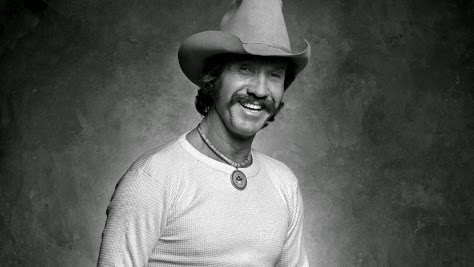
Martin David Robinson (September 26, 1925 – December 8, 1982), known professionally as Marty Robbins, was an American singer, songwriter, multi-instrumentalist, and racing driver. One of the most popular and successful country and western singers of all time for most of his near four-decade career. Robbins often topped the country music charts, and several of his songs also had crossover success as pop hits. Among his warmer memories of his childhood, Robbins recalled having listened to stories of the American West told by his maternal grandfather, Texas Bob Heckle. The city of El Paso, Texas, later honored Robbins by naming a park and a recreational center after him.Robbins' 1957 recording of "A White Sport Coat and a Pink Carnation"[4] sold over one million copies, and was awarded a gold record.[8] His musical accomplishments include the Grammy Award for his 1959 hit and signature song "El Paso", taken from his album Gunfighter Ballads and Trail Songs. "El Paso" was the first song to hit No. 1 on the pop chart in the 1960s. It was followed up, successfully, by "Don't Worry", which reached No. 3 on the pop chart in 1961, becoming his third, and last, Top 10 pop hit. "El Paso" was followed by one prequel and one sequel: "Feleena" and "El Paso City". Also in 1961, Robbins wrote the words and music and recorded "I Told The Brook," a ballad later recorded by Billy Thorpe.
He won the Grammy Award for the Best Country & Western Recording 1961, for his follow-up album More Gunfighter Ballads and Trail Songs, and was awarded the Grammy Award for Best Country Song in 1970, for "My Woman, My Woman, My Wife". Robbins was named Artist of the Decade (1960–1969) by the Academy of Country Music, was elected to the Country Music Hall of Fame in 1982, and was given a Grammy Hall of Fame Award in 1998 for his song "El Paso".
Robbins was inducted into the Nashville Songwriters Hall of Fame in 1975. For his contribution to the recording industry, Robbins has a star on the Hollywood Walk of Fame at 6666 Hollywood Blvd.
Robbins has been honored by many bands, including the Grateful Dead who covered "El Paso". The Who's 2006 album Endless Wire includes the song "God Speaks of Marty Robbins". The song's composer, Pete Townshend, explained that the song is about God deciding to create the universe just so he can hear some music, "and most of all, one of his best creations, Marty Robbins."[9] The Beasts of Bourbon released a song called "The Day Marty Robbins Died" on their 1984 debut album The Axeman's JazzJohnny Cash recorded a version of "Big Iron" as part of his American Recordings series, which is included in the Cash Unearthed box set. Both Frankie Laine and Elvis Presley, among others, recorded versions of Robbins' song "You Gave Me a Mountain", with Laine's recording reaching the pop and adult contemporary charts in 1969.
Smoked salt is an aromatic salt smoked with any number of select bark free woods for up to 14 days. Depending on which kind of wood is used for smoking impacts the flavor, whether it be subtle, bold or even sweet. The most common choices are alder wood, apple wood, hickory, mesquite, and oak. Infused smoked salts like smoked bacon chipotle sea salt are very popular because of the dynamic flavor profiles.
Smoked salt is used to enhance the inherent flavors of a dish while also imparting a smoky taste. It is suitable for vegetarians, often acting as a replacement for bacon crumble. Smoked salt differs from smoke-flavored salt as the latter contains a smoke flavored additive and is not classified as a natural salt product.


All you rootin' tootin' gun shootin' cowboys out there give this little lady a spin!
Salud, ya'll!
Henry & Jehiah


Thank you very much to Elena Aleks for posing as Felina!!


Tuesday, April 7, 2015

White Gold and "Uptown Funk"


Smoother Than A Fresh Jar Of Skippy
You know you love to look your best... try out that new outfit?.. no matter how funky your combo of flavor, when that temperature starts to rise you've got to get out on the scene. Turn your sexy volume to 11. You've been itching to flaunt it all winter. When you're wearing your favorite dress, shirt or jacket, you put out a vibe that tells others, "I feel confident and I'm here to have a good time!" So put some liquor in that cup! Get on that dance floor! Let your worries drift away. The sunshine, brunch patios and rooftops are emerging... even the limousine sunroof is rolling back. We believe you'll feel the funk once you're out on the dance floor and this song comes on. Dragons won't be retiring, but the girls will definitely be saying "wooo!!" Don't believe me? Just watch!


White Gold
Pouring that pale golden frothy liquid into your coupe for your pre-funk in your pad makes your mouth water. The shimmering glossy finish atop the cocktail reminds you of that foam party you found yourself immersed in last summer in Cabo and you're ready for another season filled with fashion, funk and fantastic outings. This week we decided to do a twist on a classic sour. Instead of whiskey, we chose to use the rich warmth of cognac and the botanic nuance of amaro. The bright red contrast and robust aromatics of Creole bitters atop a pale golden pillow drops the bass on this cocktail and sends it home on the 'A' Train all the way up to Harlem. It's like sporting Chucks and Yves Saint Laurent in the same outfit.

 Ingredients:
1 oz Amaro Nonino
3/4 oz cognac
3/4 oz lemon juice
1/2 oz honey syrup*
1 egg white
2 dashes Creole bitters

Method:
Place all ingredients except the bitters into a shaker tin. Give it a long vigorous dry shake.** Place ice in the tin. Give it a short vigorous shake. Strain into a coupe or your favorite cup. Swipe two dashes of Creole bitters on top.

*Honey Syrup: equal parts honey and water. Warm water works best to help the honey dissolve.

**Dry Shake: a common term used in the bartending world to describe a brisk iceless shake. This is usually done when egg white is present to bind all ingredients together and to create a billowing foam.


Uptown Funk
Mark Ronson's composition and arrangement coupled with the vocal stylings of Bruno Mars gives this song the perfect mix of funk and R&B to send it to the top of hit music charts around the globe. In the words of Mr. Ronson, this song is a "full-on combustible groove workout with elastic bass and indomitable spirit." The uptown cocktail scene in New York City is a sight to see as well. With cocktail bars popping up left and right, we're seeing more and more refined ingredients such as fresh squeezed juices and amaro. We feel this weeks cocktail, White Gold, pairs indubiously with "Uptown Funk" and coincides with the rich history and diverse culture of the uptown scene.


Amaro is an Italian herbal liqueur that is commonly drunk as an after-dinner digestif. It usually has a bitter-sweet flavor, sometimes syrupy, and has an alcohol content between 16% and 40%.

Similar liqueurs have traditionally been produced throughout Europe. There are local varieties in Germany (where they are called Kräuterlikör) and in Hungary, the Netherlands, and France. But the term amaro is applied only to Italian products of this kind.
Amaro is typically produced by macerating herbs, roots, flowers, bark, and/or citrus peels in alcohol, either neutral spirits or wine, mixing the filtrate with sugar syrup, and allowing the mixture to age in casks or bottles.
Dozens of varieties are commercially produced, the most commonly available of which are Averna,RamazzottiLucano, and Montenegro.
Many commercial bottlers trace their recipe or production to the 19th century. Recipes often originated in monasteries or pharmacies.
Amaro is typically drunk neat, sometimes with a citrus wedge. It may also be drunk on ice or with tonic water.
Amaro should not be confused with amaretto, another Italian liqueur that is sweet and flavored with almonds or with the pits of drupe fruits such as apricots. Nor should it be confused with amarone, a rich Italian dry red wine from Valpolicella.

Peter Gene Hernandez (born October 8, 1985), professionally known by his stage name Bruno Mars, is an American singer, songwriter, record producer, voice actor, and choreographer. Born and raised in HonoluluHawaii by a family of musicians, Mars began making music at a young age and performed in various musical venues in his hometown throughout his childhood. He graduated from high school and moved to Los Angeles to pursue a musical career. Mars produced songs for other artists, co-founding the production team The Smeezingtons.
Mars is known for his stage performances and retro showmanship. He is accompanied by his band, The Hooligans, which besides playing a variety of instruments such as electric guitar, bass, piano, keyboards, drums and horns, also serves as dancers and background singers. On stage, Mars is able to sing, dance and play a wild range of musical styles, including R&Breggaesoul and funk music.


Mark Daniel Ronson (born 4 September 1975) is an English musician, DJ, singer, and record producer.
While his debut album Here Comes the Fuzz failed to make an impact on the charts, his second album, Version, reached number two in the UK Album chart, and included three UK top 10 singles.[2] This success won him a Brit Award for Best British Male Solo Artist in 2008.[3] His third studio album, Record Collection, was released on 27 September 2010, peaking at number two in the UK.
In 2014, Ronson achieved his first UK and US number one single with "Uptown Funk", which featured vocals from Bruno Mars. In 2015 the song won Ronson the Brit Award for British Single of the Year. His fourth studio album, Uptown Special, was released in January 2015, and became his first UK number one album.
Ronson has also produced multi-platform, Grammy-winning albums for artists such as Amy Winehouse and Adele.


Get out, mix it up with your style, places you go, people you see and of course, the liquor in your cup.  
Cheers! 
Henry & Jehiah